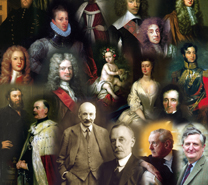
Literary Links to Penshurst Place

Page from Arcadia (c) Viscount De L'Isle

Defence of Poetry (c) Viscount De L'Isle

Loves Victory Lady Mary Wroth (c) Viscount De L'Isle
The home of poetry and literature
As a great figure of the English Renaissance, Sir Philip Sidney (1554-1586), the Elizabethan heir to Penshurst Place, is justifiably praised. His 'Arcadia' and sequence of 108 sonnets, 'Astrophel and Stella', are still studied by students and scholars.
Sir Philip's sonnet 'My true love hath my hart..' is one of the gems of English pre-Shakespearean verse. His tragic early death, at the age of 32, ensured not only early recognition but also a lasting legacy of his work. Given a state funeral, he was buried at St Paul's Cathedral in London.
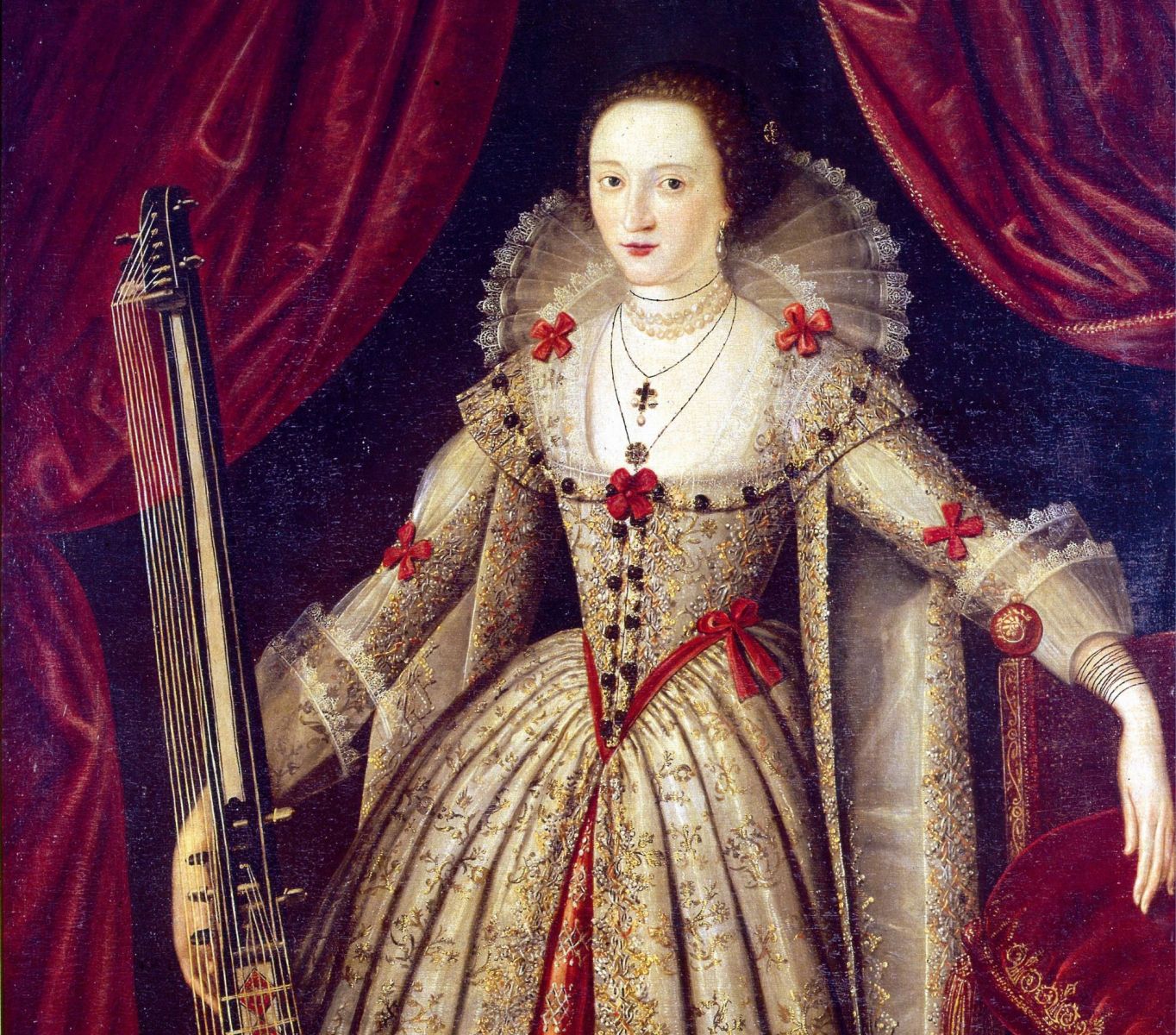
Sir Philip's talents were not the only ones to be found in the Sidney family; his brother Robert, sister Mary Sidney, the Countess of Pembroke and niece Lady Mary Wroth were also poets of repute.
An inspiration to writers
Following patronage from the Sidney family, the house and estate of Penshurst were immortalised, in the early 17th century, with Ben Jonson’s Country House poem 'To Penshurst' in which the woodland, the abundant fruit, the pheasant, fish and ‘high-swolne Medway’ were recalled as aspects, not of grandeur, but of a true home. Much as it is today.
King James I, whose unexpected visit to Penshurst Place is referred to by Ben Jonson, was moved to compose a poetic elegy on Sir Philip, just as Sir Walter Raleigh was.
At the beginning of the 19th century, the Poet Laureate, Robert Southey wrote poems on both the place of Sir Philip’s birth and also on his kinsman, Algernon Sidney, whose execution during the Restoration left a bitter memory for lovers of justice.
The Romantic poet Percy Bysshe Shelley, with hereditary links to the Sidneys through his uncle Sir John Shelley-Sidney (owner of Penshurst Place in the late 18th first half of the 19th centuries), recognised Sir Philip’s virtues in his own verse, while the Victorian Algernon Swinburne was moved to recognise the Elizabethan in the verse style of his day.
Charles Dickens used Sir Philip Sidney’s ‘Astrophel and Stella' as inspiration for his novel ‘Great Expectations’ – the main female protagonist being of course called Estella.
Literary visitors
In 1811 the Gothic novelist Mrs Ann Radcliffe visited the house and left a detailed description of it in her travel notebooks. Her work was satirised by Jane Austen who had relatives in the area and who would regularly visit her brother at Goodnestone Park Gardens in Kent.
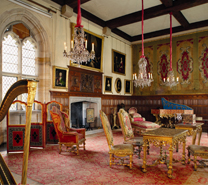
Later in the century Elizabeth Barrett Browning wrote verse about her visit to the Picture Gallery at Penshurst Place (now called the Long Gallery - one of the state rooms open to the public today) where she warmed to the picture of Lady Dorothy Sidney, ‘Sacharissa’, with her ‘clustering curls’ and ‘cheek a little pale’, recalling the fact that Dorothy had been the object of the poet Edmund Waller’s love, just before the Civil War.
In the 20th century Virginia Woolf, living not far away at Monk's House, Rodmell in Sussex, visited Penshurst Place, with her friend Vita Sackville-West. Vita's beloved childhood home was the nearby Knole house in Sevenoaks (also the setting for Virginia Woolf's novel 'Orlando'), and was living, by then, at Sissinghurst Castle and Gardens, 22 miles from Penshurst Place.
Virginia wrote, in her diary of 1940, her personal impressions of the almost deserted house and garden that was Penshurst Place then, and delighted in Queen Elizabeth’s portrait and the ‘shell of Lady Pembroke’s lute - like half a fig’.
In recent years, the tradition of literary visitors has continued, as Penshurst Place has welcomed many modern literary figures and academic authors - its past and present continuing to provide muse-like inspiration.
We hope the links included in this article are helpful and refer you to relevant content on other websites; though we can not vouch for their accuracy or take responsibility for their content.
Copyright notice: The images in this section are part of the De L'Isle private collection and archives. If you would like to reproduce the images, please see our image request section.